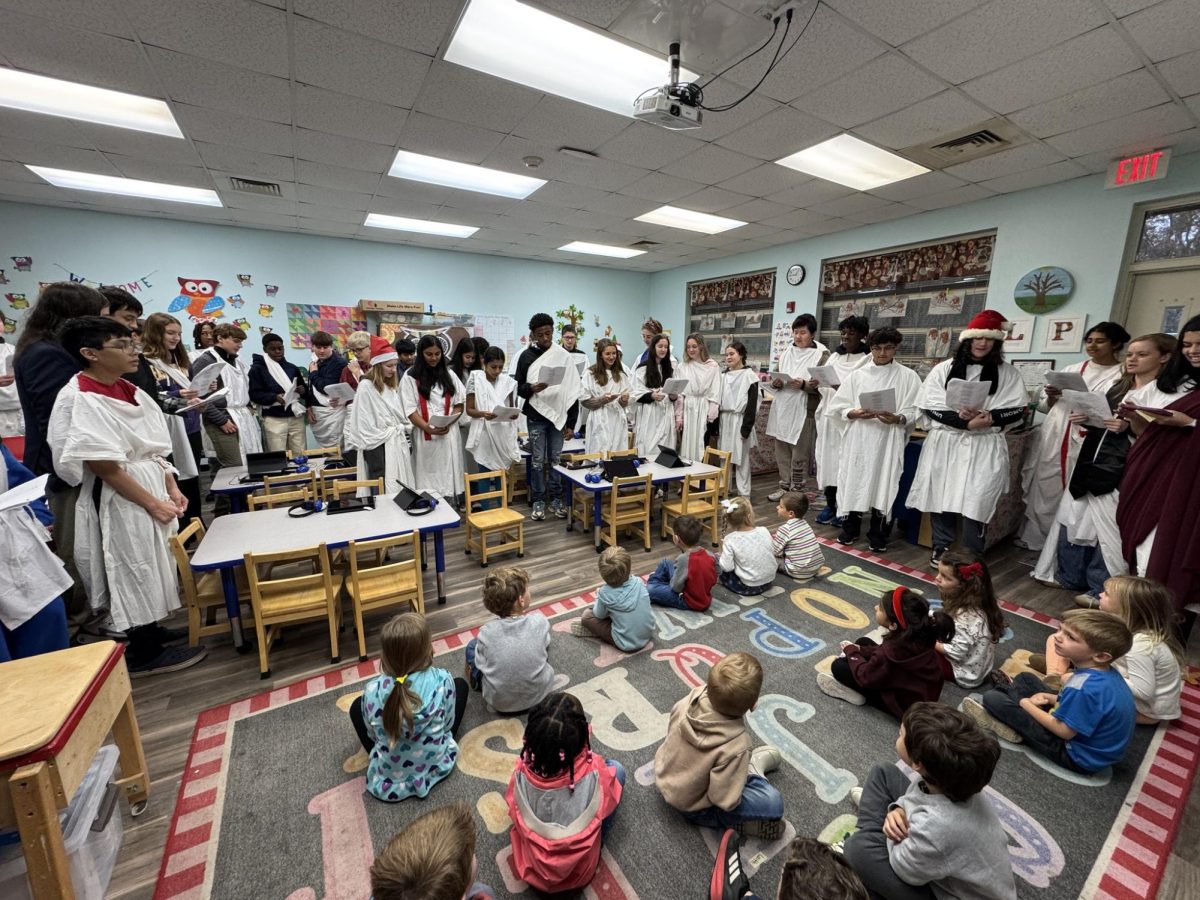
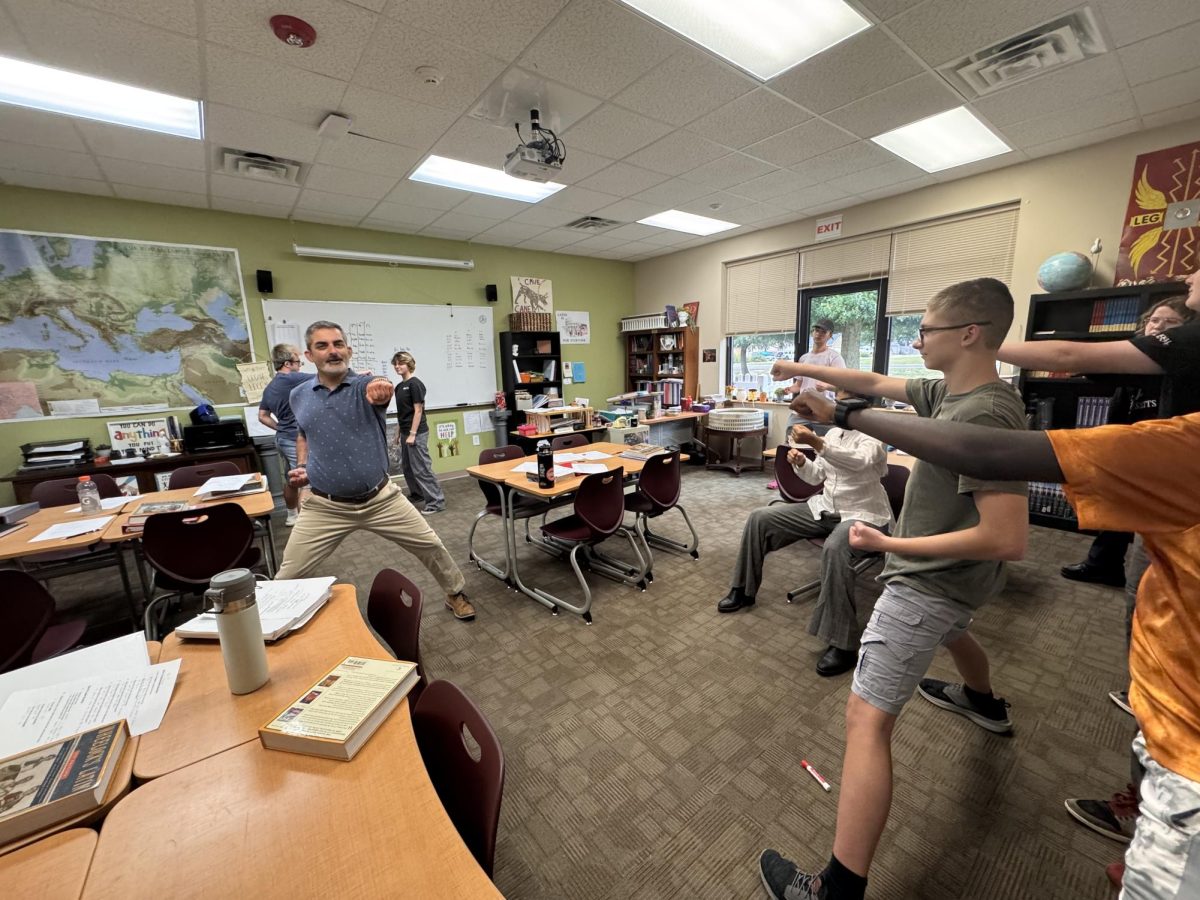
Every month, Oakwood’s Latin Senate holds potluck-style festivals for Latin students, modeled after Ancient Roman celebrations. This month and next, we have two exciting ones lined up: the Ludi Saeculares in January, and the Fornacalia in February… but more about that in the next issue!
The Ludi Saeculares was a celebration marking the passing of each century since the founding of Rome, otherwise known as the turn of the millennium. The earliest version of the festival was held by a man named Valerius, whose three children had fallen ill with the plague. To save his children, the man made sacrifices to deities known then as Dis Pater and Prosperina (the Roman Persephone), the former of which would come to be known as Pluto (the Roman Hades). When his three children were healed as a result, Valerius celebrated by hosting three nights of festival games to celebrate each of his three children. Later versions carried on in much the same spirit — the first emperor Augustus held the games to try and incite a period of peace among the people. They made different sacrifices throughout the three days and night: during the night, one to the Fates, one to Ilithyia, goddess of childbirth, and then the Terra Mater, or Earth Mother on each of the respective nights. The game’s were also held at this time, after midnight.During the day, to Jupiter (the Roman Zeus), Juno (Hera), and Diana (Artemis), on the Capitoline hills the first two days and on the Palatine the last. As is custom for large festivals, Augustus printed special coins to mark the celebration, pictured below. Subsequent emperors will also hold the celebration in their own manner to their own fancy, each also creating their own special Ludi Saeculares coins.
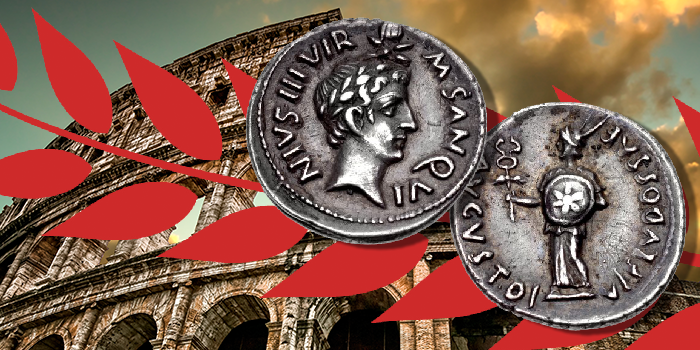
This festival remains especially relevant, as although we aren’t entering a new millennium, we are beginning a new year and moving closer to the end of the decade. And while I don’t think we’ll be making any sacrifices, I am excited to see what games Mr. Taylor has in store for our classroom activity!
SOURCES:
https://coinweek.com/coins-of-the-ludi-saeculares-and-romes-millennial-games/
https://penelope.uchicago.edu/encyclopaedia_romana/calendar/ludi.html#:~:text=Customarily%20celebrated%20only%20once%20in,saecula%20after%20those%20of%20Augustus).
https://www.forumancientcoins.com/numiswiki/view.asp?key=ludi%20saeculares&srsltid=AfmBOooJv2e8QX1cuwsL6NwYpNZH7Va76cCxF-jT470swg_2bIPjkTA3