The international trip for Oakwood in 2026 is heading to Southern Spain, a region famous for breathtaking views, deep history, and unforgettable food. Naturally, students have been curious about what this trip will actually look like and why this destination was chosen. To get some answers, I interviewed Mr. McKellar, who will be leading the Spain international trip this year, and asked him about everything from history and art to culture, food, and what he hopes students take away from the experience.
Q: Why was Southern Spain chosen as the destination for the 2026 international trip?
Mr. McKellar:
“All right, so it’s not really like I plan out the trips; EF Tours already has a lot of these set. But the reason I chose Seville is because last time we went to Spain, we went to Barcelona, and Barcelona was gorgeous. It was an amazing place to be.”
He explained that while in Barcelona, he spoke with EF Tours staff about other standout trips.
“I was hanging out with a couple of EF tour guys and having coffee with them, and I said, ‘Man, this city is incredible. What are the best trips you’ve ever done?’ They told me, ‘Oh, you won’t believe Southern Spain. If you think this is beautiful, Southern Spain is the most amazing thing EF does.’ They said Seville is just a breathtaking city.”
“So I thought, we have to do Seville. I even had to send them a message asking if they could come up with a Seville tour because one wasn’t being offered at the time, but they actually did have one that they could make happen.”
Q: What historical or cultural sites are you most excited for students to experience?
Mr. McKellar:
“One of the really cool things is the art. The Prado Museum in Madrid is one of these amazing world museums, on the level of the Louvre or the Metropolitan.”
“The most famous painting there is Las Meninas, but the best thing you can see is The Garden of Earthly Delights by Hieronymus Bosch. It’s that crazy triptych with people eating fruit, big birds, and all sorts of bizarre stuff happening. It shows paradise on one side and hell on the other.”
“You’ve seen it a million times in your life, but being able to get up close and see all the little details, like the eggshell monster in hell, is completely different.”
He also highlighted Toledo and Seville.
“Toledo has what I think is El Greco’s greatest painting, and I’ve never seen it in person. It’s this long vertical painting where it feels like you’re being pulled up into heaven.”
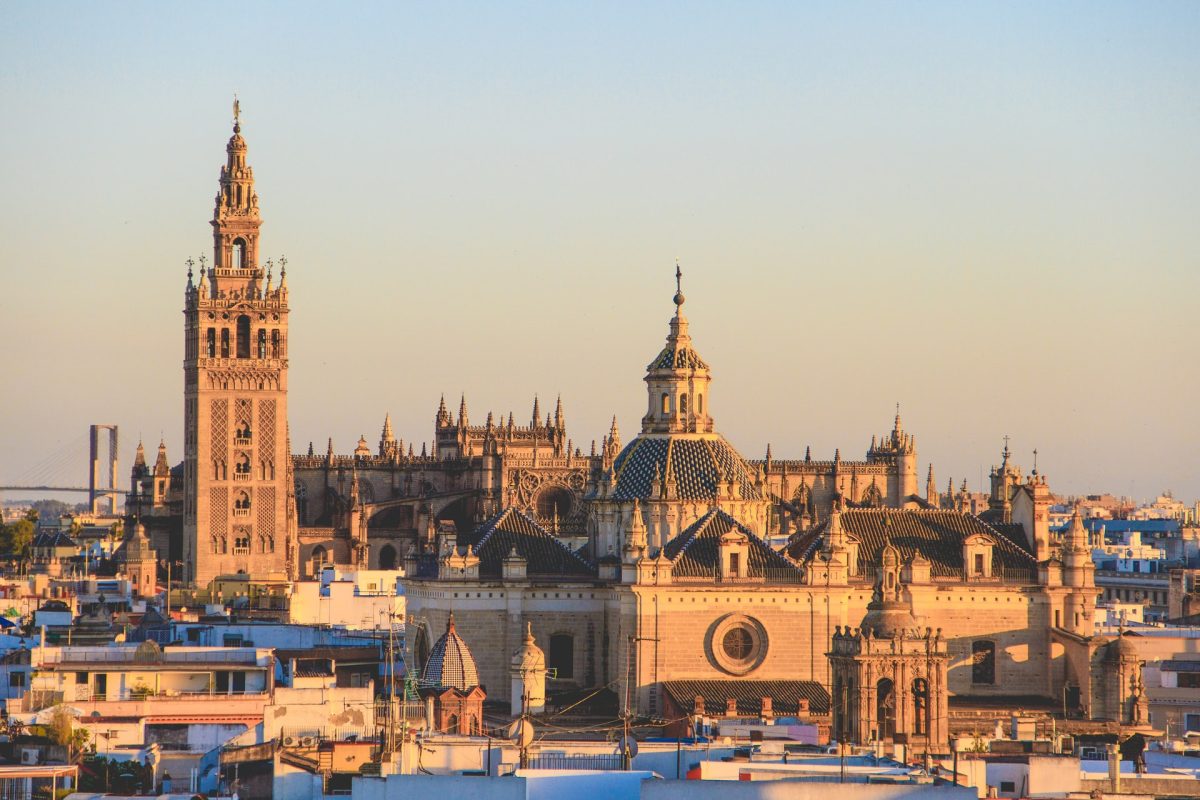
“And Seville has the largest Gothic cathedral in the world. Not the largest cathedral overall, but the largest Gothic one. When you walk inside, the space is overwhelming. A picture just can’t do that justice.”
Q: If this trip were a living history textbook, what chapter or era would stand out the most?
Mr. McKellar:
“For me, it’s the Muslim period, what they call Al-Andalus. This was a time when there was real religious tolerance, where Jewish, Christian, and Muslim scholars were all working together.”
“Seville had an enormous Jewish quarter, and cities like Córdoba and Seville were major centers of Jewish culture. This is where figures like Moses Maimonides come from, which I think is incredibly cool.”
“Sadly, that all changed with the Spanish Inquisition, when Jews were driven out. But when you’re walking through these places, you still feel the memory of what once existed.”
Q: During the interview, you mentioned Christopher Columbus and Seville’s role in his voyages. Can you talk more about Columbus’s son and his attempt to create another Library of Alexandria?
Mr. McKellar:
“Yeah, this is one of those things that I just find fascinating. Columbus actually ended up in jail and had a pretty rough ending, but his son became a favorite of Emperor Charles V and ended up very wealthy.”
“And what he decided to do with that money was try to buy every book in the world. I mean literally everything that was printed. His goal was to create a new version of the Library of Alexandria, right there in Seville.”
He explained that this was an especially ambitious idea at the time.
“This is when printing was really just getting started, so suddenly you’ve got all these books, pamphlets, music, all sorts of printed materials. He didn’t just want books, he wanted everything, anything that could be printed.”
Although much of the library no longer exists, its legacy still matters.
“There aren’t really physical remnants of it, but there are catalogs that survived. Just the idea that Seville was once the center of an attempt to collect all human knowledge is incredible.”
Mr. McKellar clearly connected to this story on a personal level.
“I’m a bibliophile. My house is basically stacked with books, it drives my wife crazy. In a weird way, I’m trying to do the same thing he was doing, just on a much smaller scale.”
“If I could time travel, I would want to wander through that library and see all those early printed books, those incunabula. The ambition of that project just blows my mind.”
Q: How does being physically present in Spain change how students understand history compared to learning it in a classroom?
Mr. McKellar:
“When you’re in a place, it becomes memorable. One of the biggest problems students have with history is that they don’t really have hooks to hang information on.”
“This trip creates those hooks. Once you’ve seen where something happened, a king, an event, a place, everything else starts to stick.”
“There’s a tower in Seville where they used to stretch a giant chain across the river to protect the city. That’s where Columbus would leave the city and enter unknown waters. You can actually see where it all began.”
Q: What cultural experiences do you think students will enjoy the most?
Mr. McKellar:
“We’re definitely doing a flamenco night, with singing and dancing. Last time, I thought kids might think it was silly, but they were totally into it.”
“They bring out these amazing dancers, and then the students actually get up and dance too. You could tell they were genuinely enjoying it.”
“Spain is also famous for tapas, which are small plates where you try a little bit of everything. You can order one of this, one of that, and experience lots of different flavors.”
Q: What usually surprises students the most on trips like this?
Mr. McKellar:
“Honestly, how much they like art museums. They never expect that.”
“And the cathedrals too. You don’t think a building will affect you emotionally, but once you’re inside one of those spaces, it really does.”
Q: What is your biggest pet peeve when leading student trips like this?
Mr. McKellar:
“Hands down, it’s students not being on time. There’s always that one kid who thinks it’s not a big deal, and it can completely mess up the schedule.”
“We’ve missed buses and lost hours before because someone could not get out of their room on time. It creates this whole domino effect where suddenly you’re late for everything.”
“I also really hate it when students are checked out. You might only be in Spain once in your life, so keep your eyes open. Thankfully, last time, most students were really in the moment, and that was great.”
Q: What emotions do you hope students take away by the end of the trip, not just what they learn?
Mr. McKellar:
“I want them to have a good time. We’re leaving cold North Carolina and walking around sunny Southern Spain in November!”
Final Takeaway
The 2026 Oakwood international trip to Southern Spain is far more than just a vacation. It is a chance for students to step directly into history, experience world-class art and architecture, and immerse themselves in a culture shaped by centuries of cultural fusion and change.
From walking through Seville’s massive cathedral to learning about an ambitious attempt to recreate the Library of Alexandria, students will not just learn history, they will experience it. As Mr. McKellar made clear, the goal of this trip is curiosity, inspiration, and connection, memories that will last long after the journey ends.