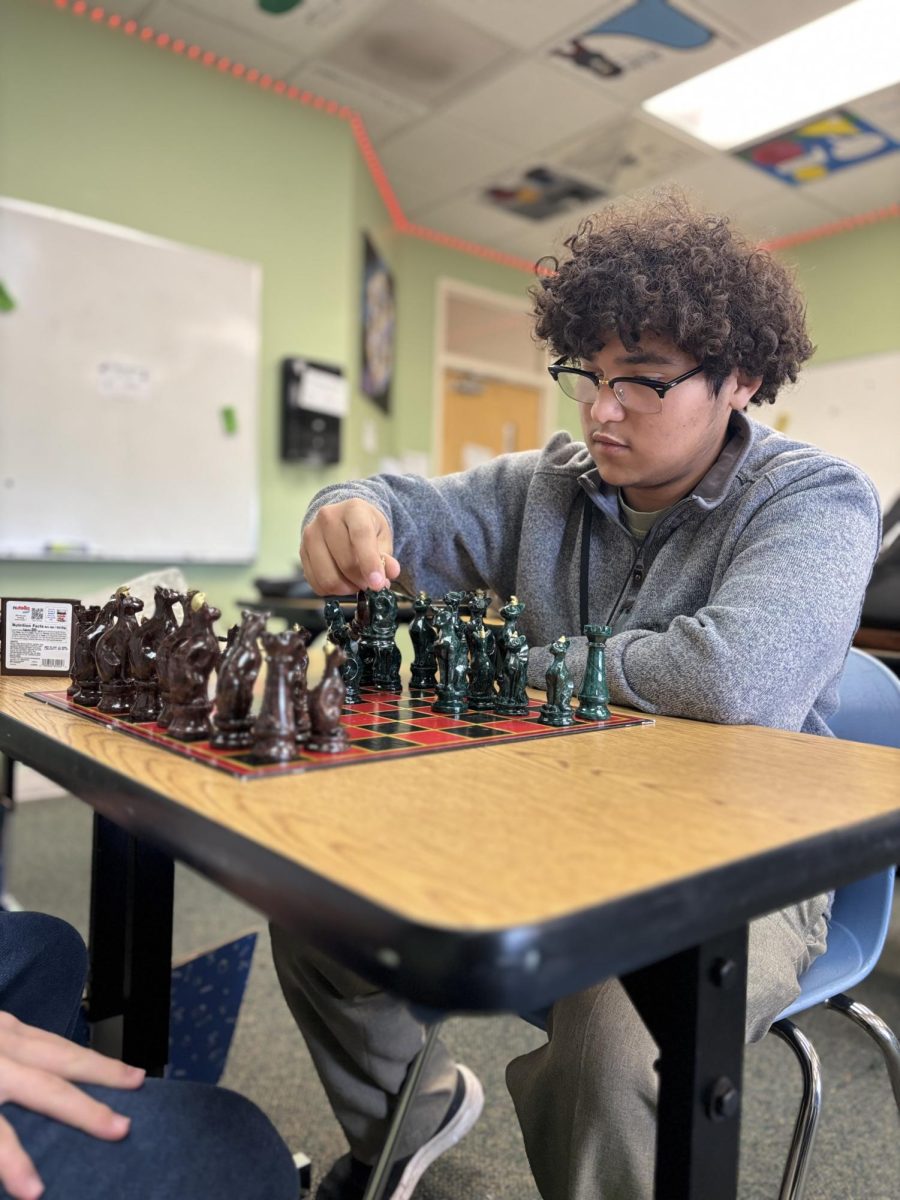
Remember the old stories of the knights in shining armor charging into battle and protecting the king and queen? A fight, a war between two sides and kingdoms. The stories told to us as kids with these elements, we know now as fiction and fantasy. But what if I could tell you that you can live through it? Playing each and every move and planning, battling kingdoms and empires of all sorts right here in school?If you want to experience the adventure of both the victories of winning and the thrill of strategic warfare through the ages, then welcome to the chess club. A place where winning is not through strength, but by smarts and brains.
Chess was originally created in Northern India around the sixth century AD. Unlike today, being a game of fun and competitiveness, in that time era, chess was used to be able to plan for and train for war. It was used by the leaders of an army to be able to make strategies and to be able to think of warfare to be able to take down an army. In this time, before traveling and getting the name of chess, it was called Chaturanga. Chaturanga in English roughly translates into “four legs” or even “four divisions.” Back then, it was played on an eight-by-eight-sized checkered board similar to the ones we play with today, called an ashtapada.
From India, the game spread to Persia in the 7th century. Here, it took the form of a fun game to play with others, but was still used in battle strategies. Here, it was renamed to shatranj. Persia was responsible for a major factor of the game that we rely on today to win and declare a win. Here, the origin of the term “checkmate” was created. Where the king is cornered, and wherever they move, they can still be taken by your opponent. Persia named the original move as Shah Mat. This translates into English as “the king is dead” or “the king is hopeless.”
The most modern version that we know of today was the version created in Europe in the 10th century. Here, the word, which was originally used in Persia, was then changed to the word chess. Chess was then adapted to be able to reflect more of the European styles of life and style. This was created mainly in both Italy and Spain, with a slow spreading into other countries around it. An example of a change that was formed was the castle piece. This piece can move to the side, forward, or back without a set number of spaces. Castle is what is known today as the official name. But in asian countries, can you guess the original name used and made in India? This piece was called the elephant. Elephants were used in India during the wars as much as horses and other animals were used.
Chess is an amazing piece of history; people all around the world have been able to play and learn. One of the pieces of human history that connects each of us today. A game of strategy, loss, and warfare. You can experience the wonder of both history and connection through the chess club. A place of friendly competition, where anyone can join, from experts to new beginners. The chess club is held every Thursday at lunchtime. If you have any questions about joining the club or anything else, the chess club president is Christian Ibarra.