As we continue to celebrate language diversity and Oakwood’s rich international culture, we ask you to look at Kenny’s article in Chinese before reading it in translation. ~ The Oakwood Oracle Staff
大家好,我是章凯宁,
我是我们北卡罗来纳州格林维尔的奥克伍德学校的一个普通学生,
关于朋友对我的评价,我现在在奥克伍德学校并没有太多朋友,
关于我的兴趣和爱好,我的兴趣主要都是一些脑力和手工工作,
关于我的一些强项和弱点,我认为我的强项是对很多事情都很认真,
关于什么能鼓励我做好工作,这个问题我也不清楚,
关于一次我在压力下做事的例子,我平时压力大的时候多了去了,
关于我一次超越他人的例子,我其实没什么显著超越他人地方,
关于我如何同时处理多项任务的方法,一般来讲,
关于我会在学科遇到困难的时候做什么,一般遇到学科困难,
关于我的职业规划,我未来想做医生,因为我的父母都是医生,
关于我对奥克伍德学校最喜欢的一点,奥克伍德学校哪里都挺好的,
这篇文章到这里就是结尾了,还是那句话,
Translation:
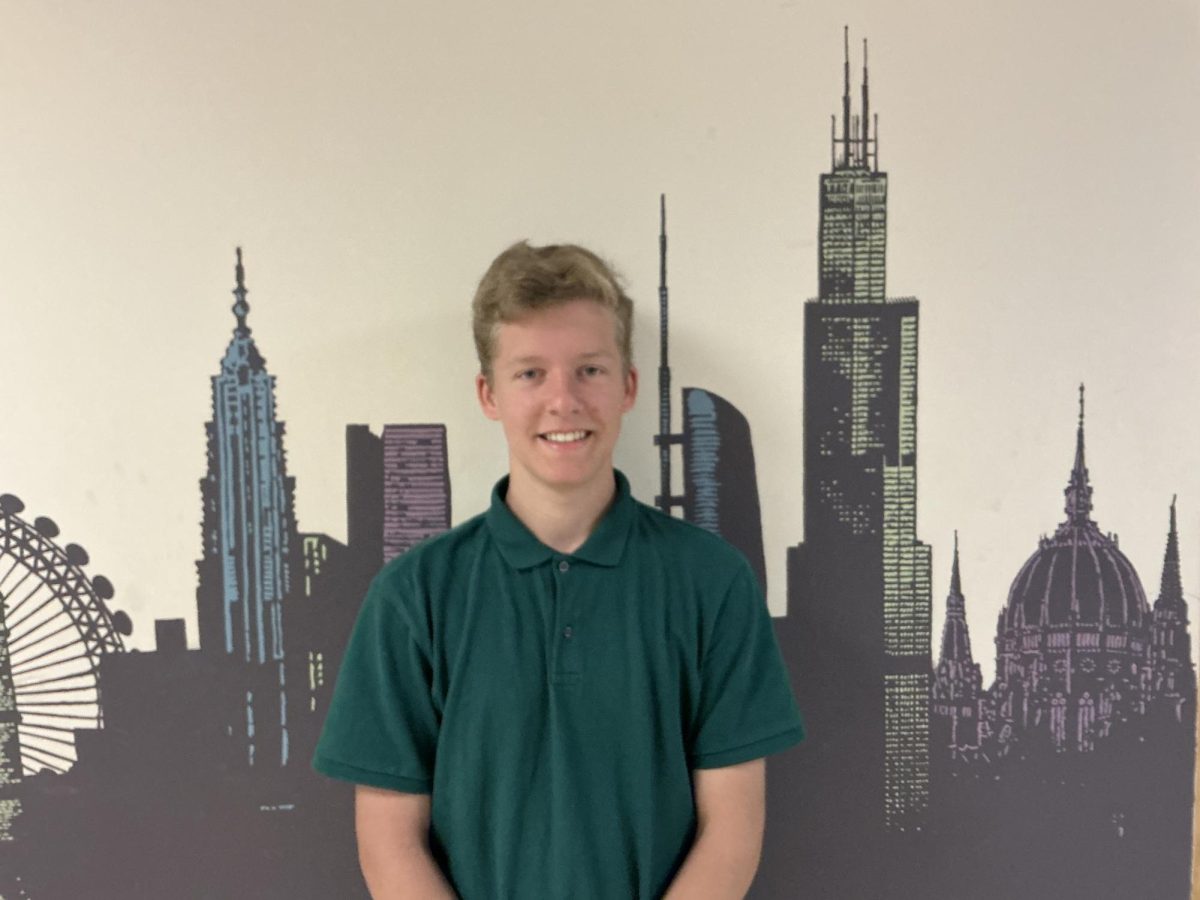
Hello everyone, I’m Kenny Zhang. I’m glad to write this self-introduction article for our school newspaper. I’m especially excited to do it in Chinese, a language with a history of several thousand years, shaped by hundreds of reforms, and still used by around 1.4 billion people today. It’s a pity that Google Docs doesn’t have proper Chinese fonts so I can’t show the beauty of the characters, but let’s not get sidetracked—here is the main text.
I am an ordinary student at The Oakwood School in Greenville, North Carolina. I am fourteen years old, born on March 16, 2011, and about 1.8 meters tall. I speak both Chinese and English. I finished elementary and middle school in China and am now attending high school here. Even though I lived in China for a long time, I am actually a Chinese American with U.S. citizenship.
About how my friends see me: I don’t have many friends at Oakwood yet, so I’m not completely sure what others here think of me. But I still clearly remember how my friends back in China described me. I used to be the class monitor in my middle school, responsible for helping teachers manage a class of more than thirty students. Because of that, my classmates often came to me for all kinds of help or tutoring, so they generally had a good impression of me. My friends usually described me as responsible, pleasant, forgiving, smart, and talkative, and they thought I could solve almost any problem. Of course, many of my friends here would probably disagree with the “talkative” part—I don’t talk much and sometimes can only manage a few awkward “uhh…” when I don’t know what to say. Many American students are extremely outgoing, and sometimes I just can’t keep up with the conversation.
As for my interests and hobbies, I mostly enjoy activities that involve thinking or hands-on work. I’m not very into sports. I really like drawing; I learned comic arts by using an anime drawing book and some online resources. I think I’m improving, although there’s still a lot I need to work on. I also sometimes build models—plastic, wooden, or clay—though I’ve lost many of them. For thinking-based hobbies, I enjoy writing stories and novels. My mind is always full of random ideas that make me want to write them down. Sometimes even a dream can inspire a whole plot. But because I often write during school breaks, I don’t have much time, so many stories don’t turn out very well or end up unfinished. That really disappoints me because some of them could have been good stories. The longest novel I’ve written is about 30,000 words, but it also ended abruptly. The draft is still in my worn-out notebook. Now I’m trying to start a new one.
As for my strengths and weaknesses: I think my biggest strength is that I take things very seriously. I always try to do everything as well as I possibly can, aiming for perfection. This helps me stay ahead and motivates me to keep moving forward without stopping. But this strength also brings weaknesses. Sometimes I give myself unnecessary pressure. I often worry that I won’t complete my homework well or won’t understand a problem, even when there’s no real reason to worry. Even here at Oakwood, I sometimes trap myself in this kind of pointless anxiety, which makes it harder to get anything done. That is my biggest weakness.
As for what motivates me to work well, I’m not completely sure. I might be competitive by nature, as I mentioned earlier. Because of that, I unconsciously push myself to do everything the best I can. But this also makes me anxious for no reason, and sometimes I put too much pressure on myself or even on others, which can lead to conflicts.
For an example of how I work under pressure—it happens a lot. But the kind of “pressure” students talk about at Oakwood isn’t really pressure to me. The most stressful thing I’ve experienced was the Geography & Biology standardized exam in China, which we called the “mini high school entrance exam.” It affects your scores for the actual high school entrance exam, which determines whether you can get into a good high school, so many students were extremely anxious. The day before the exam, I was so nervous that I kept making little mistakes—for example, I almost forgot to take off my watch because watches are not allowed in the exam room, and I nearly misplaced my pencil case. I was extremely tense, but I forced myself to calm down during the exam and made it through those dreadful two hours. After a long wait, the results finally came out. I scored very well, and I was thrilled. Even though that exam ended up not affecting me much in the long run, I was still very proud of myself.
For an example of when I think I went beyond others: I don’t have many obvious achievements that “surpass people,” but I think I adapt better than most. When I was in middle school in China, the difference between seventh and eighth grade was huge. Many students couldn’t keep up with the much harder workload in eighth grade. But I adapted quickly, kept up with the pace, and soon managed to stay on top of all my subjects.
For how I handle multiple tasks at the same time: I usually start by analyzing the tasks—figuring out which ones are harder and which are easier. Then I arrange them from hardest to easiest. This prevents me from worrying too much about the difficult ones. I tackle the hardest first and deal with the easier ones last. If time runs short, the easier tasks can be moved around more easily.
For what I do when I struggle with a subject: Usually, I believe it’s because I didn’t understand something in class, so I go back and review the lesson. I reread the textbook or my notes. If that doesn’t work, I look things up online or use AI to organize information to help me understand—after all, it’s best to solve my own problems myself. If I still can’t figure it out, then I ask someone. I’ll first ask a classmate I trust, and if that doesn’t work, I ask the teacher.
As for my future career, I want to be a doctor. Both of my parents are doctors, and I think the profession is noble. When I was little, my dad often took me to the hospital, and I watched him work and saw the patients and their families. That influenced me deeply and made me admire the profession. Being a doctor requires a lot and the path is difficult, but I still want to pursue it. I’m good with detailed work, and I think I would be well suited for it. Maybe I can even become better than my dad someday. Many people talk about saving humanity, changing minds, or reforming politics, but I think the best and most direct way to help people is to physically save them—being a doctor means healing the sick and injured and giving comfort to those who need it. Isn’t that a wonderful thing?
As for what I like most about Oakwood School: honestly, many things. Especially the students. They are enthusiastic and friendly—some may be a bit unconventional, but that’s just their sense of humor. I’ve made many friends here. The environment is truly great, and compared with my school in China, the difference is huge. At my boarding school in China, everyone was caught up in rivalry and competition, which made it hard to focus on studying. But the kindness and sincerity of Oakwood students make me feel relaxed at last. I can finally put my attention where it belongs—on learning.
This brings my article to an end. Once again, I’m honored to write for our school newspaper in Chinese, and thank you for reading!